

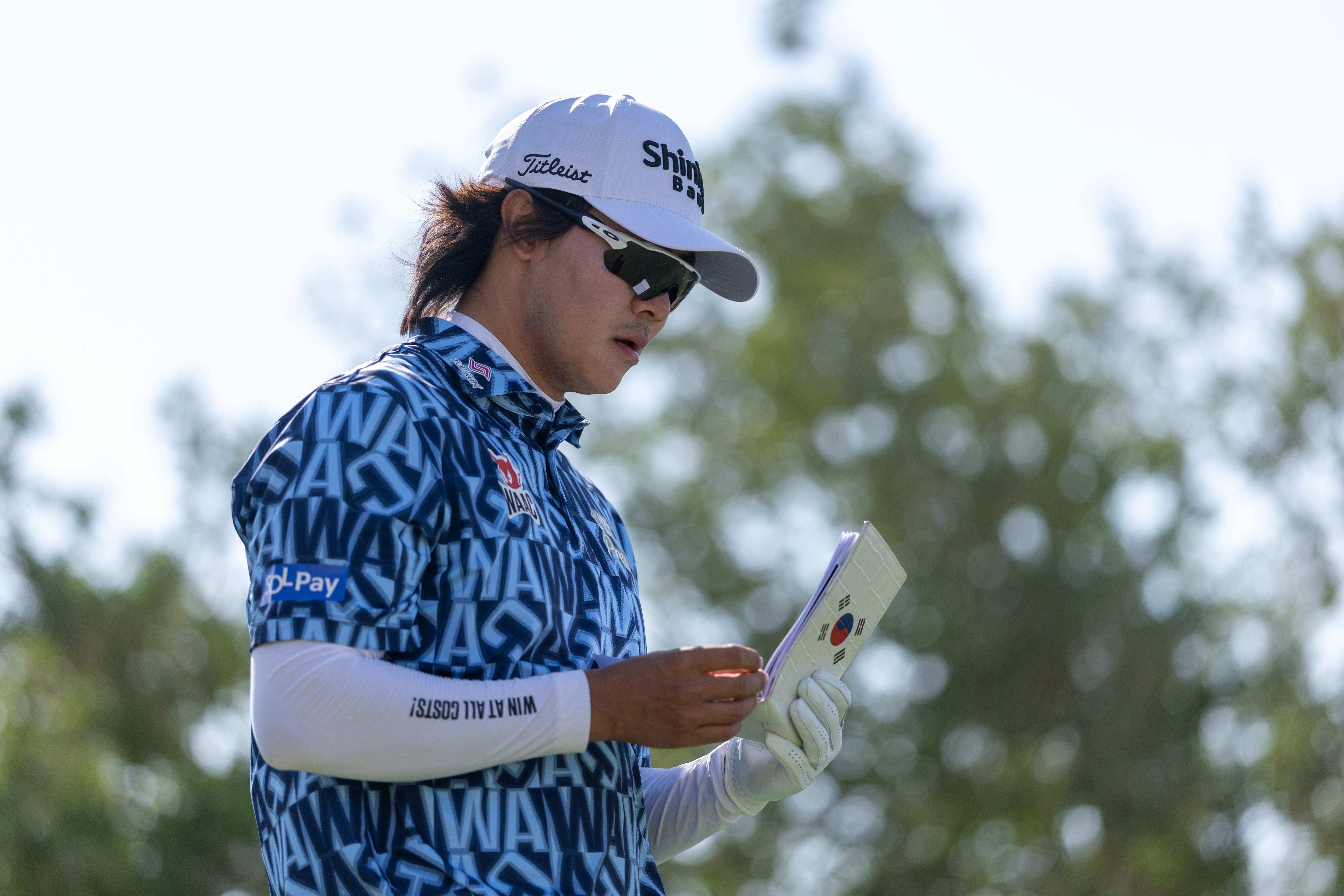
South Korea remains in an armistice that has stretched beyond 26,000 days—a tension that still shapes every young man’s life, including the nation’s brightest golfers. For Korea’s male stars, the Asian Games and Olympics are not merely sporting arenas. They are escape routes, gateways and lifelines that decide whether a career advances or halts, whether a dream grows or is forced into pause.
The reason lies in Article 39 of the Constitution: every citizen must serve. Athletes may earn exemptions, but only by bringing honour to the nation through an Asian Games gold or an Olympic medal. It is a stark exchange—glory for freedom—and no sport reflects that reality more sharply today than men’s golf.
When the delayed 2022 Hangzhou Asian Games were held in 2023, the Korea Golf Association selected its squad through world rankings and domestic standings. Two professionals—Sungjae Im and Siwoo Kim—arrived carrying something heavier than golf bags: the possibility that a medal could define the next ten years of their lives. Two amateurs, Wooyoung Cho and Yubin Jang, postponed turning professional for years, betting everything on one week.
That bet paid off. Korea’s men blitzed the field, winning team gold by 25 strokes. Im added individual silver. But the most meaningful result was unseen—the collective exhale from four golfers who knew how close they stood to a very different future.
“It was a very long week,” Im said. “Every shot affected the team score. When I made a double bogey, I was furious.”
He admitted he grew “a little greedy” on the final day, but what the week offered was bigger than hardware: “This experience helped me mentally,” he said. “I think I can focus on the PGA TOUR for much longer.”
Two years later, Im stood in Marine Corps fatigues, saluting after completing three weeks of basic training as an arts and sports service member. He thanked supporters for helping him “finish safely and without injury.” And then he revealed what the experience cost him:
“In 20 years of playing golf, I’ve never gone more than three days without holding a club.”
Now, with the burden of uncertainty gone, Im will return to the PGA TOUR in January with a freer mind. His teammates, too, can look ahead without the weight that once shadowed every tournament, every swing, every missed cut.
Others do not have that luxury.
Tom Kim remains in limbo. His tie for eighth at the Paris Olympics left him without the medal he sought, the anthem he longed to hear, and the exemption he needed. He cried after the final round. The moment exposed the emotional cost of carrying a nation’s expectations and a young man’s own future at the same time. His next chance comes at the 2026 Aichi–Nagoya Asian Games—a stage he knows is closing in fast.
The Korea Golf Association has confirmed new selection criteria. Three men and three women will compete, with priority given to Koreans ranked inside the world’s top 15. As of late November, the leading Korean men are Im, Siwoo Kim, Byeonghun An, Tom Kim, Seonghyeon Kim and Taehoon Ok. With Im and Siwoo already exempt, opportunity shifts toward An, Tom Kim and Seonghyeon Kim. Should An resolve his situation elsewhere, Ok—the KPGA’s 2025 Player of the Year—moves into frame.
March’s OWGR standings will decide everything. Hold your ground, and you go. Slip, and the door closes—perhaps for good.
Seonghyeon Kim, who returns to the PGA TOUR next year, knows exactly what is at stake.
“I know how meaningful it is to represent my country,” he said. “If I make the team, I want gold—nothing less.”
Tom Kim, still processing the sting of Paris, has chosen silence instead. He is training quietly in Korea, sharpening his tools and managing the expectations that come with immense talent. He knows windows like this do not stay open for long.
Korea’s record at the Asian Games is formidable: 14 golds, 15 silvers and 10 bronzes. Yet the men’s individual title has eluded them for 15 years. Olympic history is even slimmer—just one medal, won by Inbee Park.
And so the cycle continues: a divided peninsula, a constitutional demand and a generation of golfers whose futures hinge on a medal earned over four pressure-filled days.
For Korea’s male golfers, the Asian Games is not a stepping stone. It is a reckoning. What happens in Japan in 2026 will ripple through careers, reshape lives and determine which players surge forward and which must set their clubs aside. In a nation still suspended in a 70-year ceasefire, golf remains one of the few arenas where young men can win not just a trophy, but time itself. And time, in Korean golf, is the ultimate currency.